Nattokinase 10,800 FU: What Does the Scientific Research Actually Say?
, by Suprema Fuel Labs Ltd, 6 min reading time
, by Suprema Fuel Labs Ltd, 6 min reading time
Nattokinase has attracted increasing scientific interest because of its unique origin and its interaction with the body's fibrinolytic and cardiovascular systems.
Derived from natto, a traditional Japanese fermented soybean food, nattokinase is a naturally occurring serine protease produced during fermentation by Bacillus subtilis. Researchers have investigated its potential effects on fibrinolysis, blood pressure and several cardiovascular risk markers.
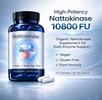
Our Nattokinase Power 10,800 FU – 60 Capsules provides a high-potency formulation measured in fibrinolytic units (FU), the activity-based measurement used to describe nattokinase enzyme potency.
But what does the science actually tell us?

Nattokinase is an enzyme found in natto, a fermented soybean product that has been consumed in Japan for centuries.
Unlike many conventional supplements that provide vitamins or minerals, nattokinase is an enzyme with fibrinolytic activity. Laboratory and clinical research has therefore focused particularly on its relationship with fibrin, the protein involved in the formation of blood clots.
Research has identified several potential mechanisms through which nattokinase may influence haemostasis, including interaction with fibrin and components of the body's fibrinolytic system.
One of the more useful pieces of evidence is a systematic review and meta-analysis of randomized controlled trials published in Reviews in Cardiovascular Medicine.
The researchers evaluated six randomized controlled trials involving 546 participants.
Their analysis found that nattokinase supplementation was associated with statistically significant reductions in systolic and diastolic blood pressure compared with control interventions.
The pooled analysis reported an average difference of approximately:
3.45 mmHg lower systolic blood pressure
2.32 mmHg lower diastolic blood pressure
The authors also found that the evidence concerning cholesterol and triglycerides was considerably less consistent.
This is important because it demonstrates why nattokinase should be discussed as an area of nutritional and scientific research rather than presented as a treatment for cardiovascular disease.
A particularly interesting randomized controlled trial investigated whether long-term nattokinase supplementation could influence markers of subclinical atherosclerosis.
The study included 265 adults without established cardiovascular disease. Participants received either nattokinase at 2,000 FU/day or placebo and were followed for three years.
Researchers assessed carotid artery intima-media thickness, arterial stiffness and several cardiovascular biomarkers.
Importantly, the trial did not demonstrate a significant difference in the progression of carotid intima-media thickness or arterial stiffness between the nattokinase and placebo groups.
This is a good example of why looking at the entire body of evidence matters: some studies show promising effects on individual cardiovascular markers, while longer-term clinical outcomes remain less certain.
The FU in 10,800 FU stands for fibrinolytic units.
It is an activity-based measurement used to describe the fibrinolytic activity of nattokinase rather than simply its weight in milligrams.
This distinction matters.
Two nattokinase products containing the same number of milligrams do not necessarily have identical enzymatic activity. For this reason, nattokinase products are commonly described using activity units such as FU.
Our product is labelled at 10,800 FU, representing the stated enzymatic activity of the formulation.
However, consumers should not assume that a higher FU number automatically means a proportionally greater clinical benefit. Human trials have investigated a range of doses, and researchers have specifically noted that more work is required to establish how dosage relates to cardiovascular outcomes.
Scientists have proposed several mechanisms for nattokinase.
Nattokinase can interact with fibrin and the fibrinolytic system in laboratory and experimental settings.
Fibrinolysis is the body's natural process for breaking down fibrin.
Several randomized trials have investigated nattokinase in relation to blood pressure.
The 2023 meta-analysis found an overall reduction in both systolic and diastolic blood pressure across the included trials.
Individual clinical studies have reported changes in certain markers involved in coagulation and platelet function.
For example, one trial included in the systematic review reported changes in collagen-epinephrine closure time and activated partial thromboplastin time following nattokinase supplementation.
These findings are scientifically interesting, but changes in laboratory markers should not be interpreted as proof that a supplement prevents heart attacks, strokes or blood clots.
The evidence is considerably less straightforward.
Some smaller clinical trials have investigated nattokinase in relation to total cholesterol, LDL cholesterol, HDL cholesterol and triglycerides.
However, the meta-analysis found no significant overall effect on triglycerides, while results for cholesterol parameters varied according to the studies and dosage groups.
Consequently, nattokinase should not be marketed as a cholesterol-lowering treatment.
Safety deserves particular attention because nattokinase has biological activity related to fibrinolysis and haemostasis.
Some clinical studies have reported good tolerability. A toxicological assessment of a standardized nattokinase preparation also found low toxicological concern under the conditions studied, including a human tolerability study.
However, "natural" does not automatically mean risk-free.
Published case reports have described serious bleeding events associated with nattokinase, including a report involving nattokinase combined with aspirin.
Another published case involved severe internal bleeding in an elderly patient taking nattokinase.
For this reason, anyone taking anticoagulant or antiplatelet medication, preparing for surgery, or who has a bleeding disorder should speak with a qualified healthcare professional before using nattokinase.
Nattokinase should never be used as a replacement for prescribed anticoagulant medication. A published case report documented thrombosis of a mechanical heart valve after a patient substituted nattokinase for warfarin.

The scientific interest surrounding nattokinase is understandable.
Research suggests that nattokinase has measurable biological activity and may influence aspects of fibrinolysis, blood pressure and haemostatic function. A systematic review of randomized trials provides evidence of modest blood-pressure effects, while other cardiovascular outcomes remain less certain.
At the same time, there is an important distinction between scientific potential and proven clinical benefit.
The published clinical trials have generally used different nattokinase doses and formulations rather than specifically testing our 10,800-FU product. Therefore, the research should be viewed as evidence about nattokinase generally—not as proof that 10,800 FU produces a particular medical outcome.
For consumers interested in nattokinase as part of an everyday wellness routine, choosing a clearly labelled product with a stated enzyme activity provides useful information about what they are purchasing.
Li X, Long J, Gao Q, et al. Nattokinase Supplementation and Cardiovascular Risk Factors: A Systematic Review and Meta-Analysis of Randomized Controlled Trials. Reviews in Cardiovascular Medicine. 2023.
Jensen GS, et al. Randomized controlled research investigating nattokinase supplementation and cardiovascular risk factors. Included in the systematic review above.
Hsia CH, et al. Nattokinase atherothrombotic prevention study: A randomized controlled trial.
Nattokinase: A multifunctional food-derived enzyme for thrombophilia management. Life Sciences. 2026.
Toxicological assessment of nattokinase derived from Bacillus subtilis var. natto.